GPT-5 Is Not Your Competitor. Your Workflow Is.
The model is the API. The workflow is the product. If you do not own the workflow, you do not own the customer.
GPT-5 Is Not Your Competitor. Your Workflow Is.
Every time a new model drops, you email me the same thing: “Is my AI product about to get killed?”
Not by the model. By your workflow.
I run two AI products in construction — Pante and BuildChain. Three model generations shipped against so far. A model release has never been the thing that hurt us. We get hurt when a competitor’s workflow makes ours look slow.
The model is the river. The workflow is the boat. Faster river doesn’t drown you. A bad boat does.
The wrong question everyone asks
When GPT-5 ships, your first instinct is to ask: can it parse a structural drawing better than GPT-4?
Wrong question. That treats the model like the product. It isn’t. The model is an API call. The product sits above it — ingestion, domain rules, a review loop, human sign‑off, and an audit trail your client’s legal team will actually read.
a16z said it well: there’s a model domain and an expert domain. Model-domain tasks (“write me an email”) are where the foundation labs win. Expert-domain tasks (“review this insurance claim against the policy and twelve years of case law”) are where vertical builders win — because the workflow is the edge, not the model.
AEC is textbook expert domain. A structural review is not “summarize this PDF.” It’s: parse the drawing, cross‑reference the spec, check the local building code, flag the three things the engineer of record will get sued for if they miss, and produce an output the client’s PM can drop into Tuesday’s coordination meeting.
GPT-5 won’t do all that by itself. A workflow will. GPT-5 is one ingredient inside it.
The model is the API. The workflow is the product.

Here’s the test I run on every AI feature we ship: if OpenAI drops a model tomorrow that’s 10× better at the single task this feature wraps, does my product die?
If yes, I’m building in the model domain. I’m a wrapper. I’m on borrowed time.
If no — because the value lives in the data I’ve ingested, the rules I’ve encoded, the review loop I’ve built, and the integration with the client’s existing BIM stack — then the model can get 10× better and I get 10× better with it. The model is a boost, not a threat.
If your product disappears when the model improves, you were never building a product. You were renting one.
Stop watching model benchmarks. Start tracking your workflow. How long does a review take, start to finish? How many handoffs? How many times does a human have to re‑explain context? That’s where the next decade of gains will show up.
What an AEC workflow actually looks like
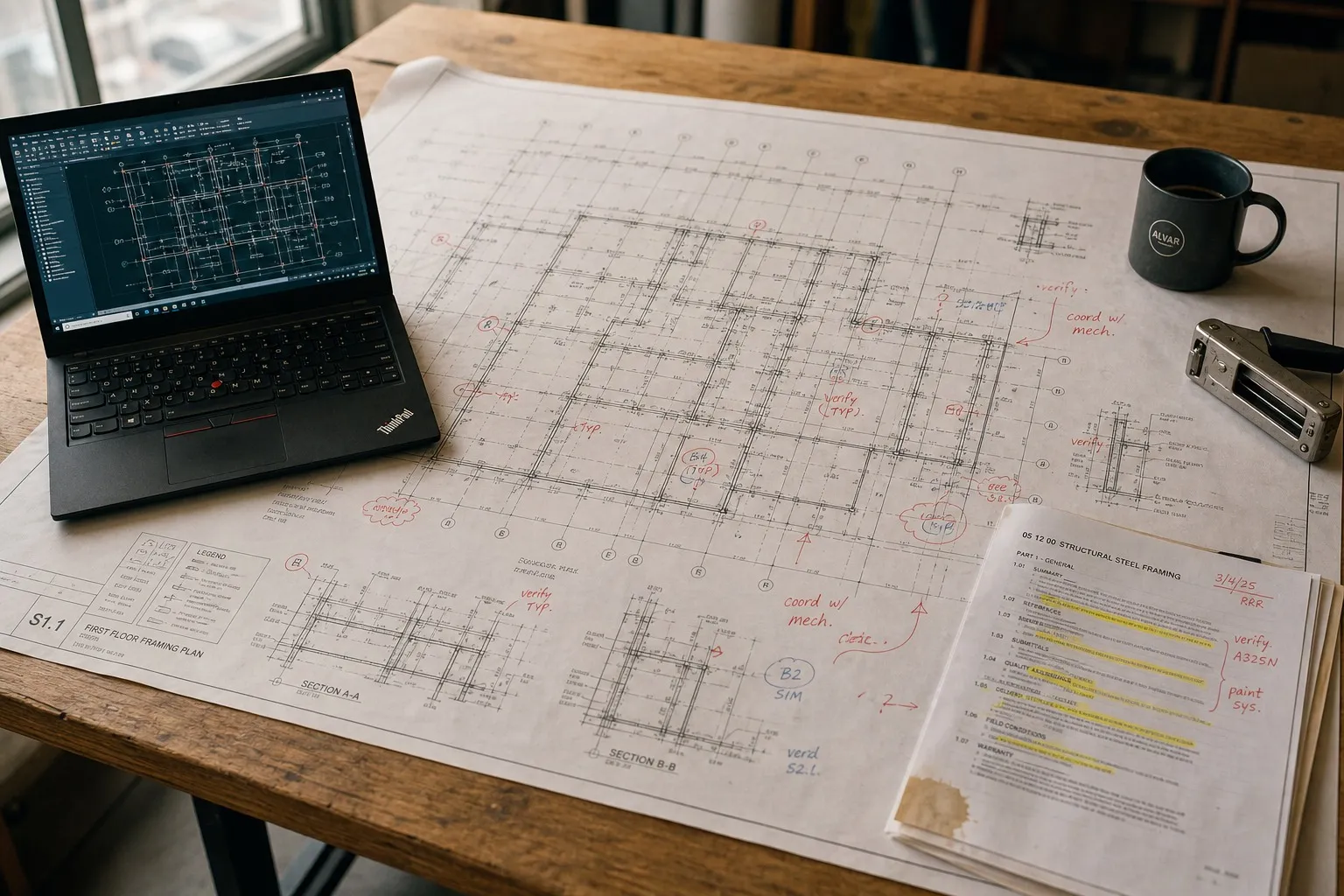
Here’s a real one. A structural drawing review at BuildChain is not a prompt. It looks like this:
- Ingest — Pull the drawing PDF, extract layers, isolate structural elements, normalize to a canonical schema.
- Context load — Pull the matching spec, the project’s code jurisdiction, the previous revision’s redlines.
- Model call — Yes, the LLM does work here. But it’s a small part. Maybe 15% of the time budget.
- Domain rule pass — Run deterministic checks the model is bad at. Code‑mandated clearances. Rebar coverage. Standards the model hallucinates if you ask it.
- Review loop — Surface the disagreements between the model’s flags and the rule engine’s flags. That’s where the engineer’s attention goes.
- Audit trail — Log everything in a format the client’s QA team can defend in a deposition.
GPT-5 touches step 3. Steps 1, 2, 4, 5, and 6 are where the product lives. If I rebuilt this on GPT-5 tomorrow, the workflow doesn’t change. Step 3 just gets better. The moat is the other five steps.
This is what generalist AI tutorials don’t teach. They’ll show you how to wrap a model in a chatbot. They won’t show you how to make that chatbot survive a contract review with a construction lawyer.
Why this matters for your career, not just your product
Same logic if you’re an AEC engineer wondering whether AI will take your job.
Generalist tasks — drafting an email, summarizing a meeting — get automated. That’s model‑domain work. Anyone with an API key can do it now.
But your actual job isn’t generalist. Your job is the workflow between “I have a problem” and “the building gets built without anyone getting sued.” That workflow is full of judgment calls, code interpretations, client politics, contractor negotiations, and tacit knowledge nobody’s written down.
A model doesn’t wipe that out. The people who learn to build workflow on top of the model get faster, safer, and more valuable. That can be you — if you choose it.
The engineers I worry about aren’t afraid of GPT-5. They treat AI like a spectator sport. They read about it. They post about it. They don’t build with it. When the workflow layer matures in their vertical, they won’t own any of it.
Three tests to run on your product this week
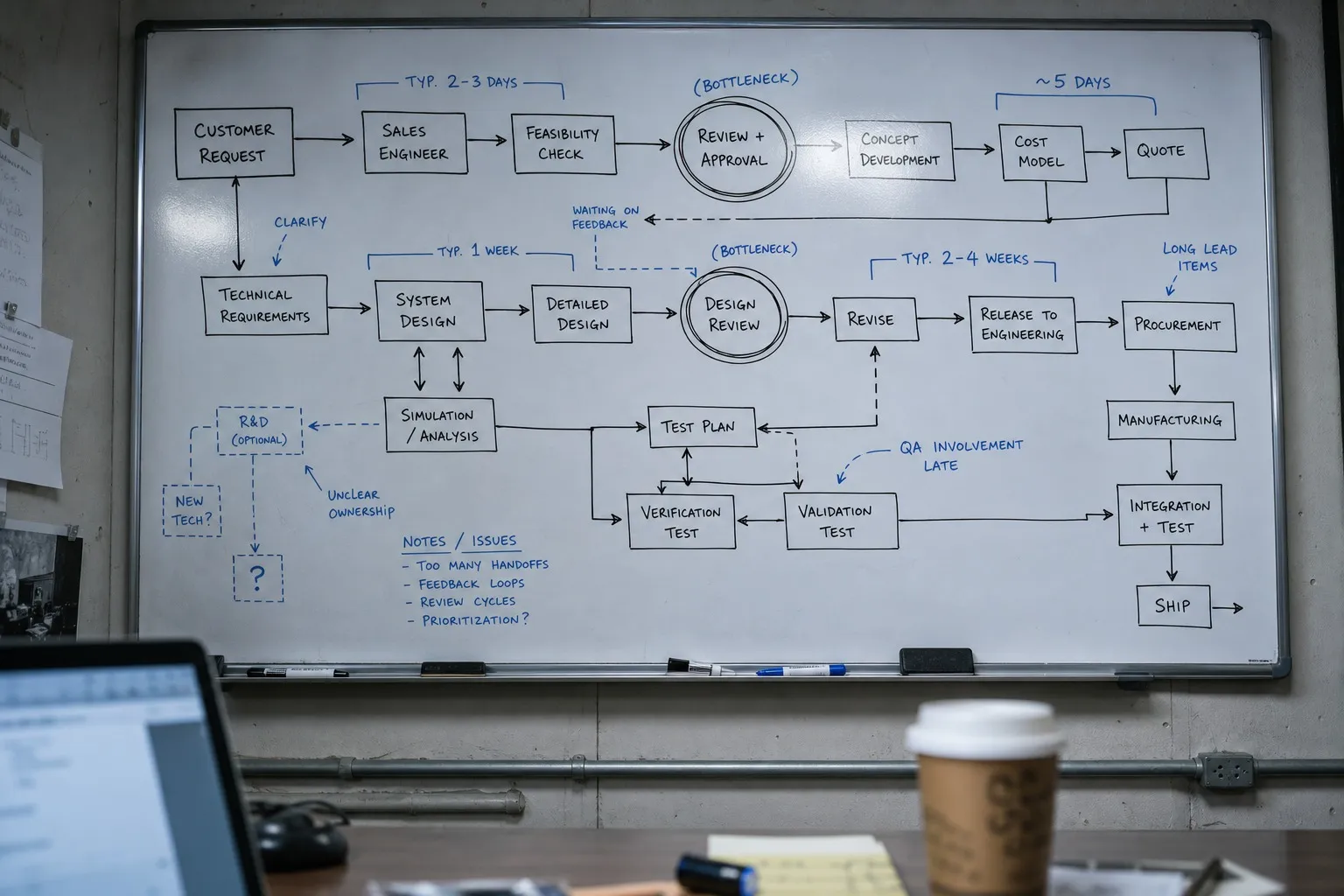
If you’re building, run these before you ship:
- The model-swap test. Could you swap the underlying model for any top lab’s equivalent and still ship? If yes, you own the workflow. If no, you’re at one lab’s mercy.
- The data flywheel test. Does every customer interaction make the next one better — in a way the foundation model can’t copy because it doesn’t have your data? If no, you’ve got no edge.
- The handoff test. When the AI is done, where does the output go? If it goes straight to a user, you’re a chatbot. If it flows into a regulated workflow with sign‑off, audit, and integrations, you’re a product.
If you fail all three, you’re building in the model domain. Pivot.
If you pass all three, the next GPT release isn’t your threat. It’s wind at your back.
What to do this week
You don’t need to rebuild your product. You need to redirect your attention.
- Map your workflow start to finish. Time every step. Find the steps that aren’t model calls. That’s where your edge lives. Invest there.
- Pick one domain rule the model gets wrong. Encode it as a deterministic check. Ship it. That’s one brick in your wall.
- Find one integration your customer can’t live without — their BIM tool, their project management stack, their compliance system. Build the connector. Models don’t have connectors. Workflows do.
- Stop reading model release notes for 30 days. Read workflow case studies instead. What is FurtherAI doing in insurance? What is Harvey doing in legal? Steal the pattern, not the prompt.
The bet I am making
I’m betting my company on the workflow layer. Not because I doubt foundation models — I use them every day, and they’re getting wildly better. I’m betting on the workflow layer because that’s where the value piles up for people who know the domain.
The model is the river. It will get faster. It will get deeper. It will reshape the landscape every quarter.
The workflow is the boat. If you build a good one, the faster river makes you faster. If you don’t build one, you’re standing on the bank watching the boats go by — and wondering why GPT-5 felt like a threat.
It was never the threat. Your missing workflow was.
Build the boat.