
Are You an Engineer Using AI, or an Engineer in Spite of AI?
AI-native is not a tool question. It is a posture question — and the gap shows up in how you hire, fire, and manage your AI like a junior on your team.
Are You an Engineer Using AI, or an Engineer in Spite of AI?
I’m watching two kinds of engineers ship this year. The gap is embarrassing.
They all have ChatGPT. They pay for Claude. Most have tried Cursor. On paper they’re “using AI.” In reality, one group ships three times the work and keeps getting promoted. The other is tired, suspicious, and quietly sure AI is overhyped.
The difference isn’t the tools. It’s the posture.
The question nobody is actually asking
We keep asking the wrong thing. “What AI tools do you use?” “Are you AI‑native?” “Tried the latest model?”
Sounds smart. Measures nothing. I know engineers with every license in the stack who still hand‑write boilerplate at 11pm because they “don’t trust the AI for production.” I also know engineers who bought Claude Pro six months ago and already automated 40% of their weekly workflow.
Same inventory. Different output.
Here’s the question that actually predicts who wins in 2026: do you manage AI, or do you tolerate it?
Tolerating AI looks like this: you paste a prompt, get a 70% answer, sigh, and rewrite it. You “saved time,” and you also fed your bias that AI can’t handle production. You repeat that fifty times a week and call it adoption.
Managing AI looks like this: you treat the model like a junior who started last week. Smart, fast, great with syntax, zero context on your codebase, no clue what the client actually needs, and no history on why your last three architectural calls were made. So you onboard it. You give it a CLAUDE.md. You attach the regulation PDF. You define “good.” When it fails, you don’t blame the junior — you fix the onboarding.
Hiring, firing, and the workflow you own

Every founder who’s scaled a small team learns one truth: you don’t get the work you want by just hiring smart people. You get it by designing the workflow they run inside. The workflow is the product. The hire executes it.
AI‑native engineers learned that early.
When I’m working on Pante or BuildChain, I’m not “using Claude Code.” I’m running a workflow where Claude Code is one of several roles on a virtual team — planner, builder, reviewer, sometimes researcher. Each role has a system prompt, a context budget, and a clear definition of done. If the output is wrong, I don’t hit “retry.” I redesign the role.
That’s the hire‑and‑fire muscle. You hire an agent into a slot. You give it a job description. If it underperforms after two iterations, you fire it — swap the model, rewrite the prompt, narrow or widen the scope. You don’t let a weak agent ride just because you already set it up. Same rule you use with real juniors.
Engineers losing this game treat AI like a magic 8‑ball. Shake, read, get annoyed, shake again. No role. No slot. No workflow. Just a chat window and a vibe.
The AEC test — does your AI know what a clash is?
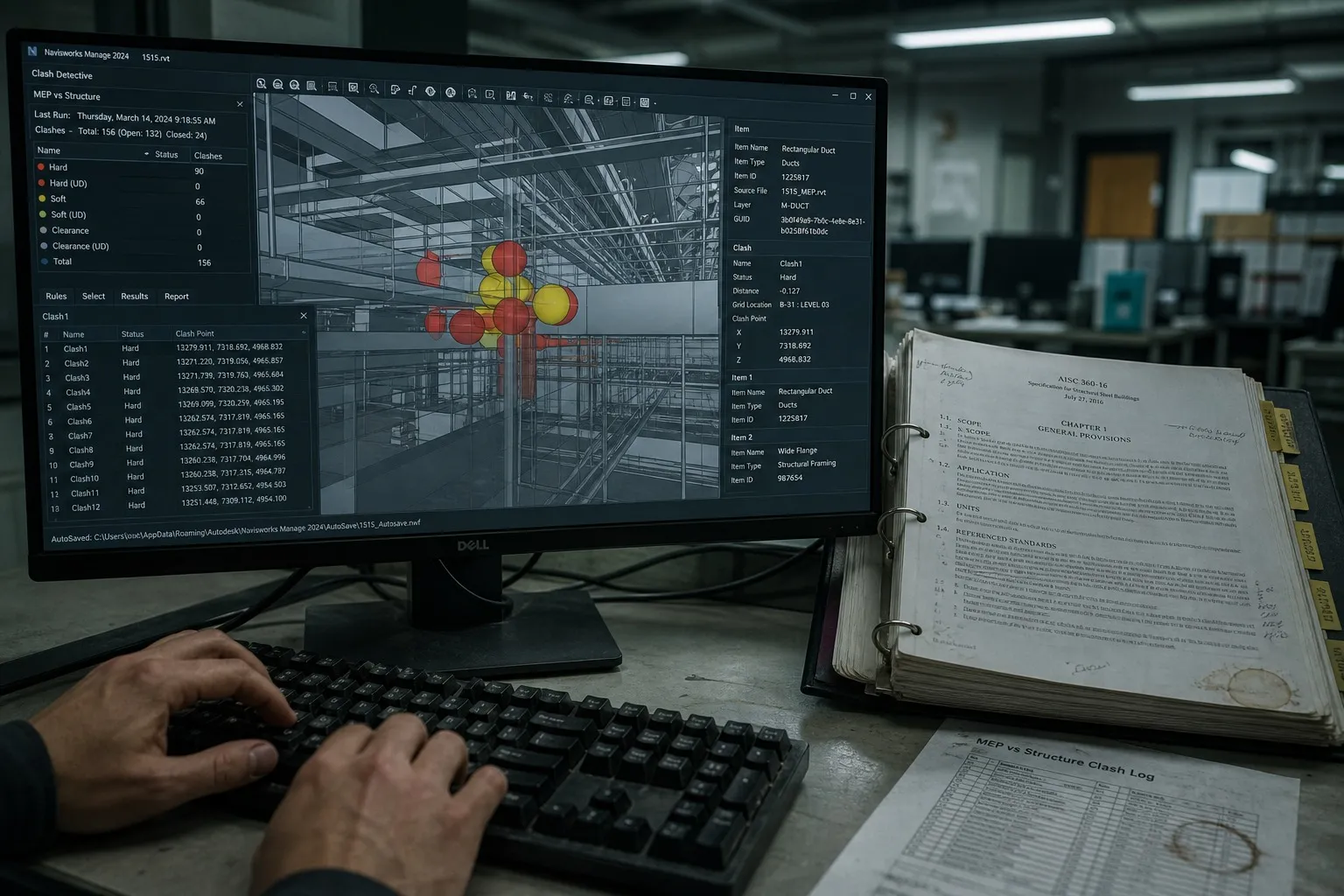
Here’s where posture really shows up — and where I spend most of my hours.
If you work in AEC — structural, MEP, civil, BIM coordination — you already know generic AI advice snaps in half the second it touches real work. ChatGPT can draft a polite email to a contractor. It can’t read a 400‑page spec and flag clauses that contradict the structural drawings. It can’t look at a clash report and prioritize the 12 clashes that will actually delay the pour next Thursday.
The engineer‑in‑spite‑of‑AI sees that and says, “AI isn’t ready for real engineering.”
The AI‑native engineer sees the same evidence and says, “AI isn’t ready out of the box — so I’ll build the workflow that makes it ready.”
Those are different conclusions. They create opposite careers.
The second engineer builds a context system. They feed the BIM Execution Plan. They load local code amendments into a vector store. They wire a small agent to watch the Navisworks export folder and pre‑classify clashes by trade and discipline. None of this is rocket science. All of it is workflow design — the same senior skill you’ve always needed, now pointed at a new junior on your team.
The interesting part isn’t the model. It’s the workflow you build around it.
Three tests to run on yourself this week
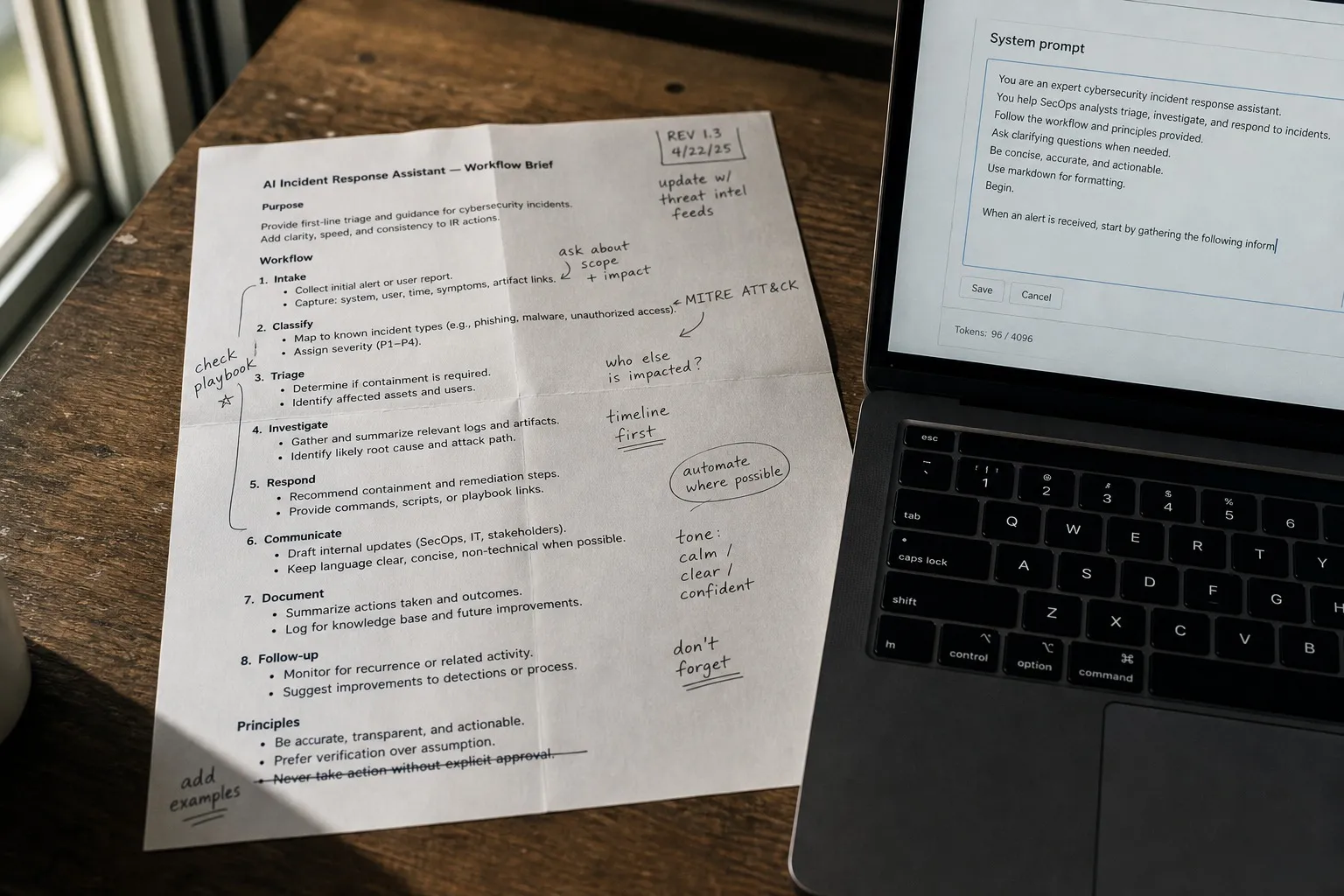
Don’t check your subscription list. Run these on your actual week.
-
The onboarding test. Open your main AI tool. Do you have a system prompt, project file,
CLAUDE.md, custom instructions — anything that tells the model who you are, what you’re working on, and what “good” looks like? If that field is blank, you’re tolerating AI, not managing it. -
The firing test. In the last 30 days, did you retire a model or workflow for underperforming and replace it for a clear reason? Not “tried a new tool” — actually decommissioned one with intent. If not, you’re collecting toys, not running a team.
-
The ownership test. When AI is wrong, what’s your first move? If it’s “rewrite it myself,” you’re still the bottleneck. If it’s “change the prompt, change the context, change the role,” you’re designing a system. One scales. One doesn’t.
Most engineers I respect fail at least one. That’s fine. Posture is learnable. You just can’t learn it while pretending you already have it.
What you can do this week
Pick one workflow you do every week — code review, spec parsing, takeoff, documentation, whatever. Don’t pick the hardest. Pick the most repetitive.
- Write a one‑page brief as if you’re onboarding a new hire Monday. Inputs? Outputs? What does “good” look like? The three common mistakes?
- Drop that brief into Claude, ChatGPT, or whatever you use as the project/system context.
- Run the workflow with AI for five working days. Track the failures.
- End of week, revise the brief — not just the prompt. You’re not tweaking a tool. You’re training a junior.
By Friday you’ll notice something uncomfortable: writing the brief is harder than doing the work. That’s the point. The brief is the workflow. It’s the moat. It’s the thing your competitor can’t copy by buying the same subscription.
The posture question, one more time
The engineers winning in 2026 aren’t the ones with the most tools. They’re the ones who chose, sometime in the last twelve months, to stop being users of AI and start being managers of it.
They hire models into roles. They fire the ones that underperform. They own the workflow those models run inside. And when someone asks, “Are you AI‑native?” they don’t answer with a tool list — they show the workflow they shipped last week.
If you’re reading this and quietly worried you’re in the other group — good. That worry is the cheapest signal you’ll get this year. The fix isn’t another subscription. It’s a one‑page brief, written this weekend, for the most boring workflow on your desk.
That’s the posture. Everything else is theater.