The 19 Days Frontier AI Went Dark — and What Builders Missed
In June 2026, the strongest model on the market was switched off by government order, not by an outage. Model access is now a policy surface, and most builders don't have a fallback for that.
The 19 Days Frontier AI Went Dark — and What Builders Missed
The outage that wasn’t an outage
Friday afternoon, June 12, 2026: the most capable general-purpose model on the market went dark for every non‑US user. No vendor bug. No hot GPUs. No region failover. The US Commerce Department signed an export‑control order and Anthropic flipped the switch — Claude Fable 5 and Mythos 5 stopped answering foreign nationals.
It stayed off for nineteen days.
If you were mid‑ship on Fable 5, you learned about “infrastructure risk” the worst way: from a non‑existent status page, for a failure mode your runbook didn’t name. This is part one of a three‑post series on the Fable 5 event. Parts two and three cover the benchmark knife fight and the builder playbook. This one sticks to what happened — and the one word I want you to walk out with.
That word is continuity.
What actually shipped, and what actually stopped
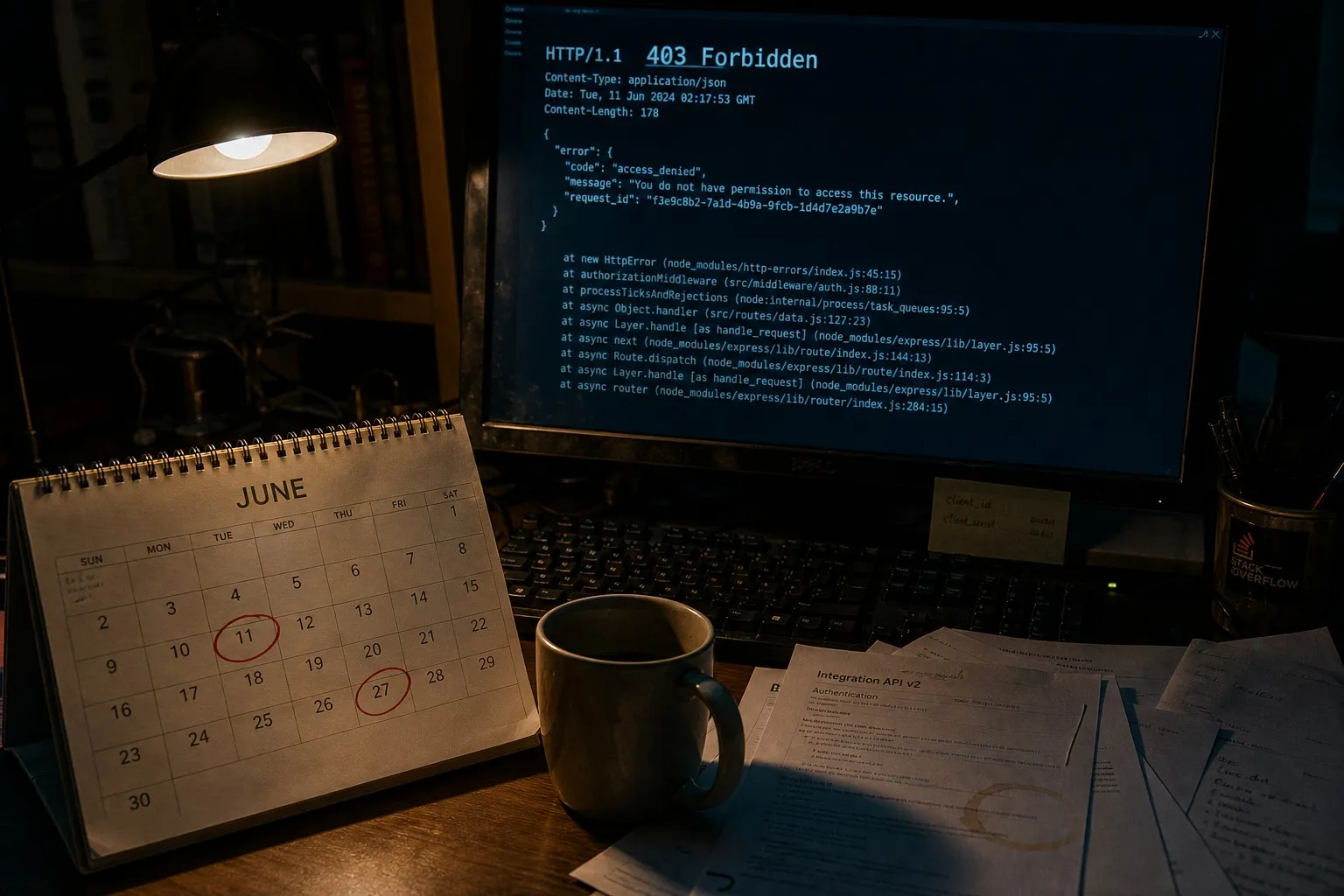
Anthropic launched Fable 5 and Mythos 5 on Tuesday, June 9. Same base model, different guardrails. Fable 5 was the public tier above Opus at $10 input / $50 output per million tokens, bundled into Pro, Max, Team, and Enterprise through June 22. Mythos 5 was the restricted sibling. The system card ran 319 pages. The Hacker News launch thread hit 2,626 points in a day.
Two and a half days later, both models disappeared for everyone outside the US. Reporting — routed through Andy Jassy at Amazon — pointed to a jailbreak disclosure as the trigger. Anthropic pushed back in public: narrow exposure, non‑universal, already‑known minor weaknesses. Didn’t matter. The order stood.
Then it got weird.
On June 15, 120+ security practitioners posted an open letter at freefable.org — On Transparent AI Cyber Protections. Alex Stamos (Corridor CPO, ex‑Facebook CSO) led it. Katie Moussouris, Chris Wysopal, Joe Levy, Casey Ellis, Paul Vixie, Rachel Tobac, and a former NSA official signed. Their point was blunt: the ban yanked the best defensive tool from the people protecting production systems, and frontier‑model risk assessment should be public and scientific, not driven by a press cycle.
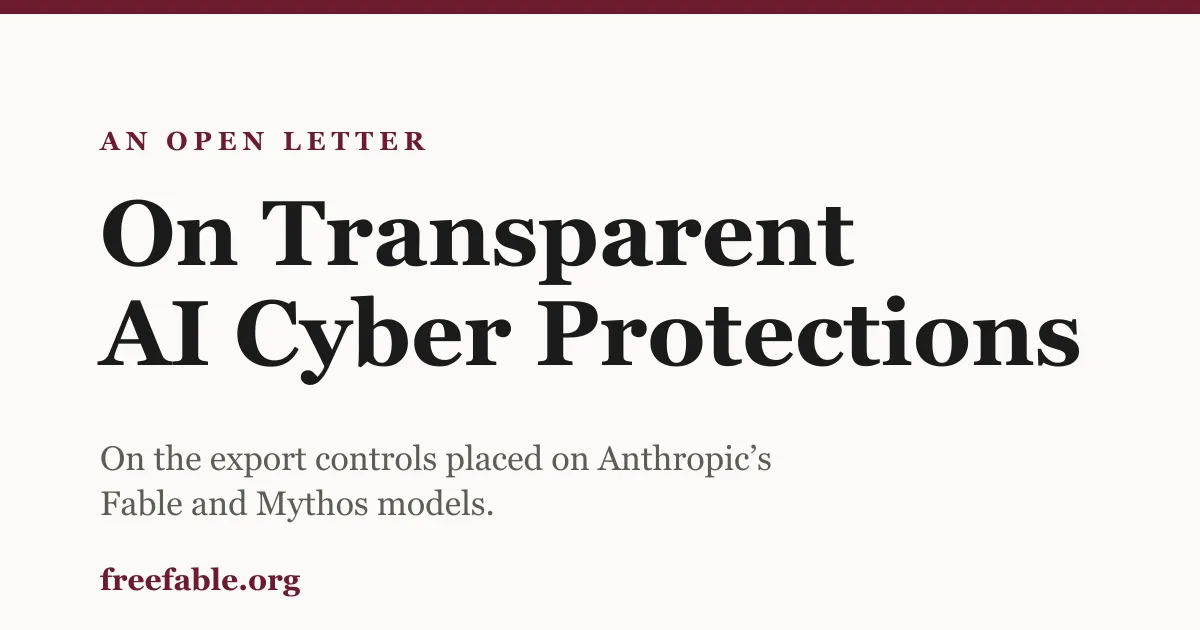 The real artifact: the open letter’s card as published at freefable.org.
Around June 28, the paradox: Mythos 5 — the model with fewer built‑in safeguards — was cleared for US critical‑infrastructure defense before Fable 5 returned to the general public. The “more careful” one stayed dark; the “trusted circle” one came back first.
On June 30 the order lifted. Fable 5 returned globally on July 1 with an extra classifier layer bolted on, and Anthropic committed to retain thirty days of traffic on redeployment. Mythos 5 returned only for approved US organizations under a program called Glasswing; the international rollout went quiet.
Subscriptions took their own hit. Users who paid for two weeks of Fable 5 got two and a half days, then fifteen days of nothing, then a return with an unannounced cap — “50% of your weekly limit” showed up with no changelog, which triggered a separate Hacker News thread over whether that rule had ever existed. The cap got extended to July 12 to make the original promise whole. Sort of.
What this event actually is

Cloudflare face‑planted in June 2022. Half the internet felt it. AWS us‑east‑1 has ruined more launch days than any competitor. That’s the flavor of outage most teams mean when they say “we need a fallback.”
Fable 5 wasn’t that.
This was a frontier model taken offline by policy, not failure. The vendor was healthy. The datacenter was fine. The weights existed and the servers were humming. A government decided your users couldn’t reach them, and that decision landed the same afternoon.
If you treat OpenAI or Anthropic like Postgres — a boring, always‑on utility you patch once in a while — this is your redraw moment. Frontier model access now behaves like Stripe entering a new market, not Redis on a Tuesday.
And it’s not just Anthropic. On June 26, right in the middle of the Fable 5 blackout, OpenAI announced GPT‑5.6 as a government‑coordinated limited preview — roughly twenty vetted orgs, coordination with OSTP, ONCD, and Commerce — before a July 9 GA. I’ll unpack the GPT‑5.6 contrast in part two. Hold the small signal now: coordinated rollouts are becoming normal. When the top two labs clear big releases with government first, “we called the API” is a supply‑chain answer, not a technical one.
What the community said out loud
The sharpest takes came from people who’d already wired Fable 5 into daily work and had to rip it back out.
One Max subscriber canceled and got a refund the day access dropped — “felt like a toy got taken away” — then re‑upgraded to Max the day it returned. Not churn. Stickiness plus rage on interruption.
Another commenter, bushido, wrote what many were thinking: “The loss of trust in using US‑based models is not going to recover. The administration got sold on doomsday messaging, at best, and it’s kicked off some kind of arms race.” You can disagree with the framing and still see the impact. Buyers in Europe and Asia watched the same nineteen days you did.
A third thread came from bescob_ar: was the mid‑return cap “faux‑scarcity marketing or an actual capacity projection risk”? No one outside Anthropic knows. That’s the problem. When rollout rules change three times in a month, the line between policy constraint and product‑marketing choice disappears for the team building on top.
The dependency check your runbook is missing
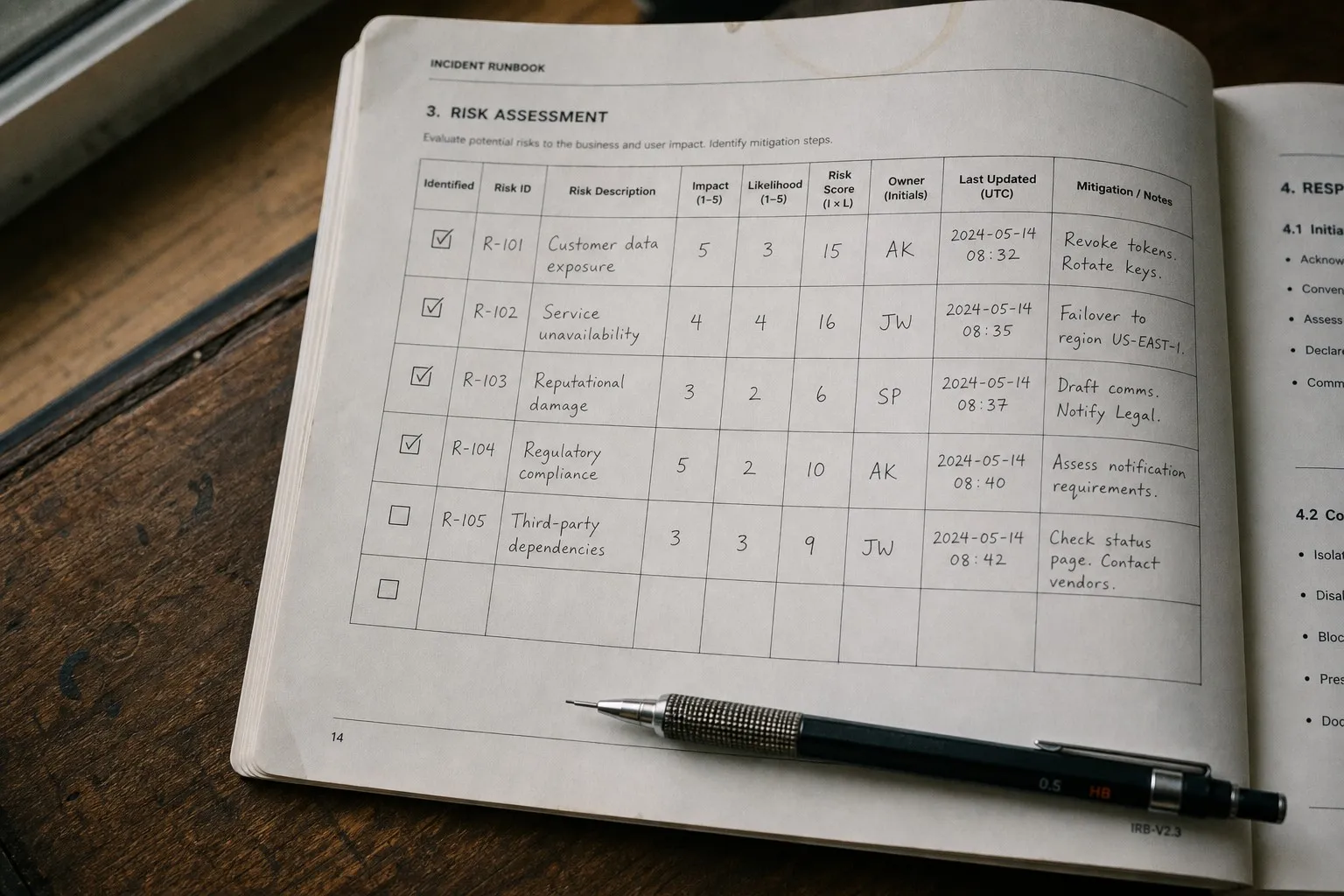
Do this now. Open your model‑dependency doc — the one from your last SOC 2 or incident review. Scan the failure modes you actually planned for. Odds are you listed:
- API price increase
- Model deprecation with a migration window
- Rate‑limit or capacity throttling
- A vendor outage measured in hours
Add a row: Immediate suspension of access by government order, no notice, for nineteen days, scoped by nationality or geography. That’s not theory. It happened. You have a timeline, press links, and a 407‑point HN redeployment thread to cite.
The question isn’t “will it happen again.” When a power exists, it gets used. The question is what your product does on the Tuesday afternoon it happens to you.
Three moves to make this week, ahead of the deeper playbook in part three:
Write the nineteen‑day scenario. Not “our provider is down for two hours.” Nineteen days. Which features degrade, which ones turn off, which customers get an email. If you can’t answer in a paragraph, you don’t have a continuity plan. You have a wish.
Sort must‑succeed calls from can‑wait calls. In most AI products, 60–80% of calls are latency‑insensitive background work. Batch queues, cheaper or open‑weight models, and delayed processing cover more ground than you think. The pain is the 20% that runs in the user’s face.
Map who your provider answers to. This isn’t paranoia. It’s supply‑chain literacy. If your primary and your fallback both live under the same jurisdiction, you don’t have a fallback. You have two copies of the same risk.
Part two digs into the benchmarks — what Fable 5 and GPT‑5.6 can and can’t do, and what changed under Anthropic’s redeployed classifiers. Part three is the builder strategy: how I’m restructuring model calls in my own AEC pipeline so nineteen dark days don’t take a production feature with them.
For now: assume someone other than your vendor can switch off the model you build on. Design the next feature like that’s true. Because on June 12, it was.